- Friday before Shravana full moon
- July or August
- Karnataka, Andhra Pradesh, Telangana, Tamil Nadu
Where it began
Vara means boon. Varalakshmi is Lakshmi, the goddess of wealth and wellbeing, who grants her devotees' wishes. Praying to her on this day is said to be like praying to the eight forms of Lakshmi together.
One story from the Skanda Purana tells of Charumathi, a devoted woman who saw the goddess in a dream. Lakshmi asked her to keep this vow, and Charumathi and the women of her town were blessed with plenty.
Another story tells that Shiva told Parvati of this vow as the best one for the wellbeing of the family.
How it grew over time
Puranic times
The vow and the story of Charumathi are told in the Skanda Purana.
Medieval period
The vow became a family custom in Telugu, Kannada and Tamil homes.
Today
Women keep the vow at home and in temples, with gatherings of neighbours and friends.
How it is celebrated in different places
Andhra Pradesh and Telangana
Women tie a yellow thread on the right wrist and share thamboolam with friends.
Karnataka
A decorated kalasha with a face of the goddess is the centre of the pooja.
Tamil Nadu
Called Varalakshmi Nombu, women tie the nombu charadu thread and make kozhukattai.
US, UK and Australia
Telugu and Kannada families keep the pooja at home and in temples.
Varalakshmi Vratham today
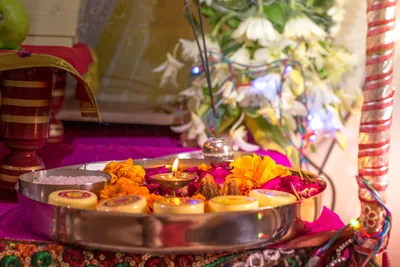
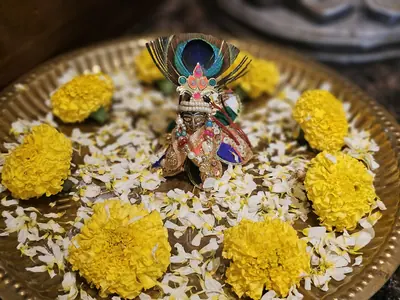
The house is cleaned and a kalasha, a pot of water with mango leaves and a coconut, is set up and dressed as the goddess with a sari and jewellery. Women fast, sing songs to Lakshmi and offer sweets, fruits and flowers.
After the pooja, women tie a sacred yellow thread on their wrists and give gifts of betel leaves, turmeric, kumkum, bangles and fruit to other women.