- Navami of Navaratri
- Purattasi or Aippasi month
- Tamil Nadu, Kerala, Karnataka, Andhra Pradesh
Where it began
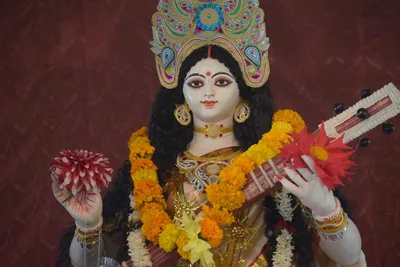
Saraswati is the goddess of knowledge, speech, music and wisdom. Her name is also the name of an old river praised in the Rig Veda.
Navaratri, the nine nights, honours the goddess in three forms: Durga, Lakshmi and Saraswati. The last three nights belong to Saraswati, and on Navami people rest their books before her.
How it grew over time
Vedic times
Saraswati is praised as a river goddess and later as the goddess of speech.
Medieval period
Temples and courts in South India held Navaratri with music and learning.
Royal era
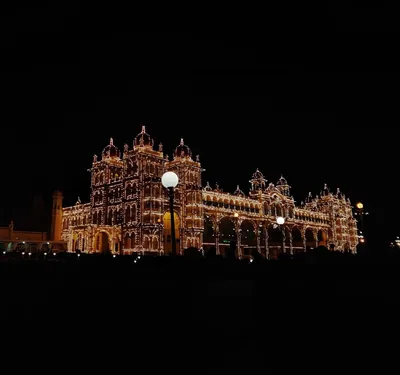
The Mysore and Travancore courts kept Saraswati Pooja with music concerts, a custom that continues at temples.
Today
Schools, homes and offices place books and instruments for pooja, and Vidyarambham follows on Vijayadashami.
How it is celebrated in different places
Tamil Nadu
Kept with Ayudha Pooja, with golu dolls on steps and sundal shared with visitors.
Kerala
Pooja Veppu, placing books before the goddess; on Vijayadashami children write their first letters in rice.
Karnataka
Part of Dasara; music recitals and book worship at home and in temples.
Andhra Pradesh and Telangana
Saraswati is worshipped at Basara and other temples, where children begin their letters.
Saraswati Pooja moments
Saraswati Pooja today
On the evening before, families place books, notebooks, pens and musical instruments before a picture of Saraswati and decorate them with flowers, sandal paste and kumkum. Students do not study that day; the books rest with the goddess.
On Vijayadashami morning, the books are taken back with prayers. Young children sit with an elder to write their first letters, a custom called Vidyarambham.