TodayTools

About Obon

00 days

About Obon

Obon is a Japanese Buddhist custom of honouring the spirits of ancestors, who are said to return home for a few days in summer. In most of Japan it is held from 13 to 16 August; Tokyo and some other areas keep it in July, and some places follow the lunar calendar.

Families return to their hometowns, clean and visit family graves, set out offerings of fruit and flowers, and light small welcome fires and lanterns to guide the spirits home. At the end, send-off fires are lit and in some places lanterns are floated on rivers, called toro nagashi.

Obon is also a time of community: towns hold bon odori dances in a circle around a tower with drums, and summer festivals with food stalls light up the warm evenings.

  • Three days, mid-August in most places
  • Mid-July in parts of Tokyo
  • Japan and Japanese communities

Where it began

Obon comes from Urabon, a Japanese form of a Sanskrit word for a Buddhist festival of offerings to the departed. It is linked to the Ullambana Sutra.

Buddhist tradition tells of Mokuren, a follower of the Buddha, who saw that his late mother was suffering. On the Buddha's advice he made offerings to monks at the end of their summer retreat, and she was freed. Overjoyed, he danced, and this joy is remembered in Bon Odori.

Lanterns floated on the water to see the spirits offKyoto, Japan

How it grew over time

  1. 7th century

    Records show Bon ceremonies held at the Japanese imperial court.

  2. Heian and Kamakura periods

    The custom spread from the court to temples and ordinary families.

  3. Edo period

    Bon Odori dances and lantern customs became common in towns and villages across Japan.

  4. Today

    Obon is one of Japan's busiest travel times as people go home to visit family.

How it is celebrated in different places

  • Kyoto

    Gozan no Okuribi lights giant fires on the hills to send the spirits back at the end of Obon.

  • Tokushima

    The Awa Odori dance festival fills the streets with music and dancing groups.

  • Hawaii and the Americas

    Japanese American temples hold Bon dances that welcome everyone to join.

Obon moments

Lanterns glow above a Bon Odori dance at duskJapan
Prayers for a departed soul, from an old printJapan
A Bon dance drawn in an early 20th century printJapan
Dancers in yukata join the Bon OdoriJapan
Mukaebi fires light the way home for the spiritsJapan

Obon today

Families set up a small altar with fruit, flowers and food, light a welcome fire or lantern, and visit the graves of loved ones. At the end, lanterns are floated on rivers in toro nagashi to see the spirits off.

In the evening, people in light yukata dance around a raised stage to drums and folk songs.
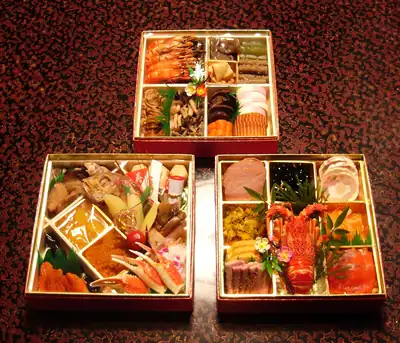
How people celebrate Obon

  • Visiting and cleaning family graves
  • Welcome and send-off fires (mukaebi, okuribi)
  • Chochin lanterns
  • Bon odori dances
  • Floating lanterns (toro nagashi)
  • Offerings of fruit, flowers and sweets

How to wish well

  • Obon is a gentle time of remembrance as well as family reunion, so keep messages warm and calm rather than "happy party" words.
  • A summer greeting card (shochu mimai or zansho mimai) is a common way to keep in touch around Obon.
  • For colleagues, wish them a restful break and a safe trip home.

Questions about Obon

When is Obon?

In most of Japan from 13 to 16 August. In Tokyo and a few other areas it is held in mid July, and some places follow the old lunar calendar.

What do you say during Obon?

There is no single greeting. People often send summer greetings, or wish "a peaceful Obon" and a safe trip home.

What is bon odori?

A circle dance held during Obon to welcome and honour the ancestors, danced to drums and folk songs around a raised stage.

What is toro nagashi?

Floating paper lanterns on rivers or the sea at the end of Obon to send the spirits of ancestors back.

Keep exploring

Related

Coming up next

    All festival wishes

    Donate