TodayTools

About Baisakhi

00 days

About Baisakhi

Baisakhi, also spelt Vaisakhi, is the spring harvest festival of Punjab and the start of the solar new year. It falls on 13 or 14 April, when the Sun enters Mesha, the first sign of the sidereal zodiac.

For Sikhs it is also Khalsa Sajna Divas: on Vaisakhi in 1699, Guru Gobind Singh Ji founded the Khalsa at Anandpur Sahib, a community of the initiated devoted to courage, equality and service.

Farmers give thanks for the ripe wheat. Families visit the gurdwara, join nagar kirtan processions and share langar. Melas, bhangra and giddha fill the evening.

Baisakhi is celebrated across Punjab, Haryana, Himachal Pradesh and Delhi, and by Sikh and Punjabi communities in Canada, the UK, the US, Australia and Malaysia. The same day is the new year in many other parts of India and South and Southeast Asia.

  • 13 or 14 April
  • Harvest and solar new year
  • Khalsa founded in 1699
  • Punjab, Haryana and the Sikh diaspora

Where it began

The name comes from Vaisakh, the month in the Indian calendar when the festival falls. For farmers in Punjab it is the time the golden rabi wheat is ready to cut, so the day began as a thanksgiving for the harvest and a start to the new year.

For Sikhs the day carries a deeper meaning. On Vaisakhi in 1699 at Anandpur Sahib, Guru Gobind Singh, the tenth Guru, called the community together and created the Khalsa. Five men who came forward became the Panj Pyare, the five beloved ones, and were the first to receive amrit.

The day is also kept as a new year by many communities across India under other names, such as Bohag Bihu in Assam, Pohela Boishakh in Bengal and Puthandu in Tamil Nadu.

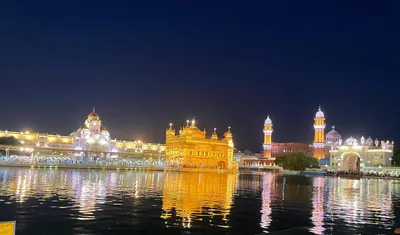
The Golden Temple at night, where pilgrims gather on VaisakhiAmritsar, Punjab

How it grew over time

  1. Ancient times

    Farmers in the Punjab plains mark the wheat harvest and the start of the solar year with fairs and thanksgiving.

  2. 1699

    Guru Gobind Singh founds the Khalsa at Anandpur Sahib, and Vaisakhi becomes one of the most important days for Sikhs.

  3. 1800s and 1900s

    Big fairs grow at places like Anandpur Sahib, Talwandi Sabo and Amritsar, drawing pilgrims and farmers alike.

  4. Late 1900s

    Sikh and Punjabi communities in Britain, Canada and the United States begin large street parades called nagar kirtans.

  5. Today

    The day is kept with prayer, processions, harvest fairs and dancing in Punjab and wherever Punjabis live.

How it is celebrated in different places

  • Amritsar, Punjab

    Pilgrims gather at the Golden Temple to bathe in the sacred pool and listen to kirtan through the day.

  • Anandpur Sahib

    The town where the Khalsa was born holds a large gathering and processions.

  • Punjab and Haryana villages

    Farmers start the harvest, and fairs bring bhangra, gidda, wrestling and food stalls.

  • Canada

    Surrey and Toronto hold some of the largest Vaisakhi parades outside India, with floats, music and free food for all.

  • United Kingdom

    Southall in London and cities like Birmingham see colourful nagar kirtans and community meals.

Baisakhi moments

The gilded domes of Sri Harmandir SahibAmritsar, Punjab
An old colour print of pilgrims resting by the sacred poolAmritsar, Punjab
An old painting of Maharaja Ranjit Singh holding court near the Golden TempleAmritsar, Punjab
A nineteenth century photograph of the temple causewayAmritsar, Punjab

Baisakhi today

Sikh families visit the gurdwara in the morning for prayer and langar, the shared free meal. Nagar kirtan processions led by the Panj Pyare move through the streets with hymns and music.

In the fields and towns people dance bhangra and gidda to the beat of the dhol, wear bright new clothes and share sweet dishes like kheer and jalebi.
How people celebrate Baisakhi

  • Visiting the gurdwara and Amrit Vela prayers
  • Nagar kirtan processions
  • Langar, the shared free meal
  • Bhangra and giddha at village melas
  • Thanksgiving for the wheat harvest
  • New clothes and festive food like kheer and chole bhature

How to wish well

  • Greet in the morning; many families go to the gurdwara early.
  • For Sikh friends, "Khalsa Sajna Divas di vadhai" or "Waheguru ji ka Khalsa, Waheguru ji ki Fateh" shows respect for the day's meaning.
  • Keep jokes about the harvest, food and dancing; never about the Gurus, the turban or faith.
  • The same day is Vishu in Kerala, Puthandu in Tamil Nadu, Bohag Bihu in Assam and Pohela Boishakh in Bengal, so a new year wish suits many friends.

Questions about Baisakhi

When is Baisakhi 2027?

Baisakhi in 2027 is on 14 April.

Is Baisakhi on 13 or 14 April?

It falls on the day the Sun enters Mesha. That is 14 April in most years and 13 April in some, such as 2024 and 2028.

Why is Baisakhi celebrated?

It is the wheat harvest festival and the solar new year in Punjab. For Sikhs it also marks the founding of the Khalsa by Guru Gobind Singh Ji in 1699.

What do you say on Vaisakhi?

Say "Happy Vaisakhi" or in Punjabi "Vaisakhi diyan lakh lakh vadhaiyan".

Are Baisakhi and Vaisakhi the same?

Yes. Vaisakhi is the Punjabi spelling and Baisakhi the Hindi one. Both name the first day of the month of Vaisakh.

What is Khalsa Sajna Divas?

The day the Khalsa was created, on Vaisakhi 1699 at Anandpur Sahib. Sikhs celebrate it with prayers, kirtan and processions.

Keep exploring

Related

Coming up next

    All festival wishes

    Donate