- Ninth day of Navaratri (Navami)
- Month of Purattasi or Aippasi
- Tamil Nadu, Karnataka, Kerala, Andhra Pradesh
Where it began
Ayudha means tool or weapon. In old times, kings and soldiers worshipped their weapons before the season of campaigns began. Over time, the custom grew to include every tool used for work.
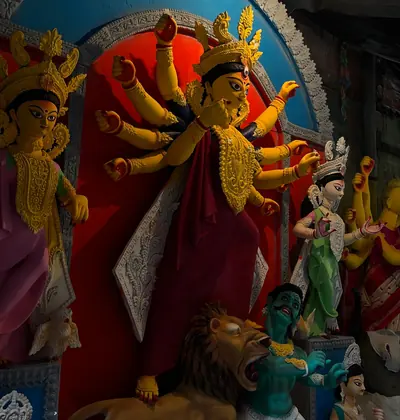
One story tells that the goddess Durga defeated the demon Mahishasura on this day and laid down her weapons, which were then worshipped. Another story in the Mahabharata tells that Arjuna took back his weapons hidden in a Shami tree at the end of the Pandavas' exile.
How it grew over time
Ancient times
Warriors honoured their weapons and horses at the end of the monsoon, before campaigns.
Vijayanagara era
The Mahanavami festival at Hampi included worship of arms, horses and elephants by the king.
Mysore kingdom
The Wodeyar kings kept Ayudha Pooja in the palace as part of the Dasara festival.
Today
Factories, shops, offices and homes clean and bless their tools, vehicles and machines.
How it is celebrated in different places
Tamil Nadu
Kept with Saraswati Pooja; vehicles are washed and decorated with banana stems and flowers, and pumpkins are broken for good luck.
Karnataka
Part of Dasara; the Mysore Palace holds the royal weapon worship.
Kerala
Books and tools are placed for pooja, and children begin learning on Vijayadashami the next day.
Andhra Pradesh and Telangana
Called Ayudha Puja, with vehicles and tools blessed at home and work.
Ayudha Pooja today
On the eve, people clean their workplaces, shops and vehicles. Tools, books and machines are arranged, marked with sandal paste and kumkum, and offered flowers, puffed rice, sweets and fruit. Vehicles carry banana leaves and garlands, and an ash gourd is broken to ward off bad luck.
Many offices and factories hold a pooja for all staff and share sweets. The tools rest for the day and are used again on Vijayadashami.