- Tenth day of the temple festival
- Malayalam month of Kumbham
- Thiruvananthapuram, Kerala
Where it began
Attukal Bhagavathy is worshipped as a form of the goddess, and devotees see her as the mother of all. Legend links the temple goddess with Kannaki, the heroine of the Tamil epic Silappatikaram, who was welcomed by the people of Attukal.
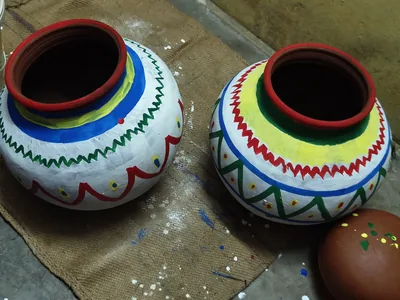
Pongala means to boil over. Women cook a sweet dish of rice, jaggery and coconut in new clay pots, and offer it to the goddess. The fire is lit from the temple hearth and passed along the lines of stoves.
How it grew over time
Old times
The temple grew from a small shrine where local families worshipped the goddess.
20th century
The Pongala offering grew from a local rite to a gathering that filled the streets around the temple.
1997 and 2009
The Pongala was recorded as the largest gathering of women for a religious event in the world.
Today
Lakhs of women line kilometres of roads across the city, and the city prepares for days ahead.
How it is celebrated in different places
Thiruvananthapuram, Kerala
Stoves of three bricks stretch along roads, lanes and courtyards for kilometres around the temple.
Rest of Kerala
Women travel from every district, and many towns run special buses and trains for the day.
Gulf countries and beyond
Malayali women abroad travel home for the day or pray at local temples.
Attukal Pongala today
On the morning of Pongala, women set up their stoves and pots days ahead. When the temple priest lights the main hearth, the flame passes from stove to stove, and the city fills with smoke and prayer. At the set time, priests sprinkle holy water on the offerings.
People living along the route open their homes, give water and food, and help visitors. The festival is a picture of faith, sisterhood and care.