- Aippasi full moon (Oct-Nov)
- Rice offered to Shiva
- Tamil Nadu temples
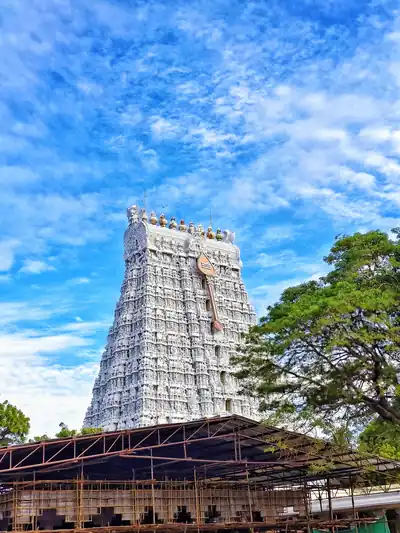
- Gangaikonda Cholapuram, Thanjavur
Where it began
Anna means cooked rice and abhishekam means a holy bath given to a deity. On this day the bath is not of milk or water but of rice, piled over the lingam until it is fully hidden.
Devotees see food as a form of the divine. Legend says every grain of rice holds the image of Shiva, so offering rice back to him is a way of saying thanks for the food that keeps all life going.
The full moon of Aippasi is believed to be the time when the moon is at its brightest and fullest, and the rice offering on this night is linked to plenty and well-being for every home.
How it grew over time
Chola times
The great Chola temples, built in the 11th century at Thanjavur and Gangaikonda Cholapuram, house some of the largest lingams in India and became the best known homes of the rite.
Temple tradition
Over the centuries the offering spread to Shiva temples across Tamil Nadu, with local families and farmers giving rice from their own fields.
Recent decades
Large temples began to cover their huge lingams with many sacks of rice, vegetables and sweets, drawing big crowds for the evening darshan.
Today
The rite is kept in temples across Tamil Nadu and by Tamil communities abroad, and the rice is shared out after the worship.
How it is celebrated in different places
Gangaikonda Cholapuram
The giant lingam of the Brihadisvara temple is covered with rice in one of the most famous Anna Abhishekam rites.
Thanjavur
The Big Temple holds the offering for its tall lingam, with crowds coming in from nearby villages.
Temples across Tamil Nadu
Shiva temples in towns and villages hold smaller rites, often with rice given by local farmers.
Tamil temples abroad
Tamil communities in Malaysia, Singapore and Sri Lanka keep the day in their Shiva temples.
Anna Abhishekam moments
Anna Abhishekam today
Families go to the temple in the evening to see the lingam covered in rice. After the worship, part of the rice is given to devotees as prasadam, and part is put into rivers and ponds for fish or left for birds, so the blessing reaches every living being.