- Jyeshtha Amavasya or Purnima
- May or June
- Prayer at the banyan tree
- North India and Maharashtra
Where it began
Vat means the banyan tree. The tree lives for a very long time, and so it stands for long life and strength.
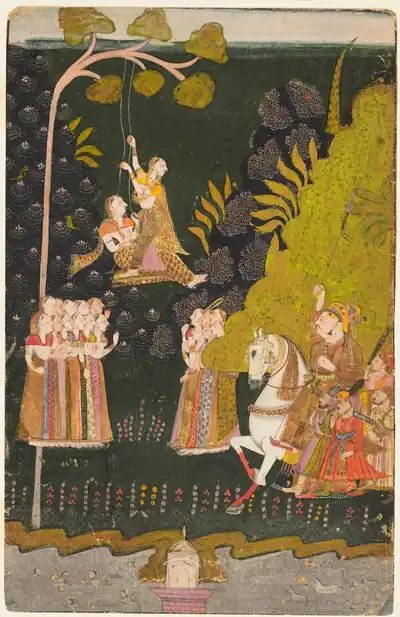
Legend says Princess Savitri married Satyavan, though she knew he would live only one year. When Yama came to take his life, she followed him and spoke so wisely that Yama gave Satyavan back.
The story is told in the Mahabharata, and women retell it under the banyan on this day.
How it grew over time
Ancient times
The story of Savitri and Satyavan appears in the Mahabharata.
Medieval period
Women in many regions keep a fast in Jyeshtha and pray at banyan trees.
Modern times
Groups of women gather at old banyans in towns and cities to pray together.
Today
The day is kept across India, and many women also plant banyan trees.
How it is celebrated in different places
Uttar Pradesh and Bihar
Women keep the fast on the new moon, offer fruit and wind thread around the banyan.
Maharashtra, Gujarat and Goa
Vat Purnima is kept on the full moon, about two weeks later, with prayers at the tree.
Odisha
Savitri Brata is kept with a fast and the reading of the Savitri story.
Nepal
Women in the Terai keep the fast and pray at banyan trees.
Vat Savitri moments
Vat Savitri today
Women wear bright clothes, carry plates of fruit, flowers and sweets to the banyan, and walk around it as they wind cotton thread. They listen to the Savitri story and end the fast later in the day.