TodayTools

About Pohela Boishakh

00 days

About Pohela Boishakh

Pohela Boishakh, also written Poila Baisakh, is the first day of the Bengali calendar and the Bengali New Year. It falls on 14 April in Bangladesh and on 14 or 15 April in West Bengal, Tripura and Assam's Barak Valley.

The Bengali year began as a harvest and revenue calendar, timed so that farmers could pay dues after the crop came in. That is why traders still open a new account book, the Haal Khata, and offer sweets to their customers on this day.

Families wear new clothes, often red and white, draw alpana at the door and greet each other with "Shubho Noboborsho". There are fairs, music, prabhat pheri songs at dawn and feasts with fish, rice and plenty of sweets. In Dhaka the colourful Mangal Shobhajatra procession is listed by UNESCO as cultural heritage.

It is a public holiday in Bangladesh and West Bengal, and Bengali communities in the UK, the US, Canada, Australia and the Gulf celebrate it too.

  • 14 or 15 April
  • Bengali new year
  • Bangladesh, West Bengal, Tripura
  • Mangal Shobhajatra in Dhaka

Where it began

Pohela means first, and Boishakh is the first month of the Bengali calendar. The day has long marked the start of the farming and trading year in Bengal.

Many historians link the Bengali calendar to the time of the Mughal emperor Akbar, when the year was set to match the harvest so that land taxes could be collected at a fair time. Others trace its roots to older solar calendars of the region.

Traders began the custom of halkhata, opening a new account book on the first day of the year. Customers were invited to settle old dues and were treated to sweets, a custom many shops still follow.

Friends gather on the lawns of Curzon Hall on new year dayDhaka, Bangladesh

How it grew over time

  1. Mughal period

    The Bengali calendar, by many accounts, is shaped to follow the harvest season for tax collection.

  2. 1800s and early 1900s

    Halkhata and new year fairs become common in towns and villages across Bengal.

  3. 1960s

    The cultural group Chhayanaut begins its dawn concert under the banyan tree at Ramna Park in Dhaka.

  4. 1989

    Students of the Faculty of Fine Arts at Dhaka University begin the colourful new year procession now called Mangal Shobhajatra.

  5. 2016

    UNESCO adds the Mangal Shobhajatra to its list of the intangible cultural heritage of humanity.

  6. Today

    The day is a public holiday in Bangladesh and a big cultural day in West Bengal and Tripura.

How it is celebrated in different places

  • Dhaka, Bangladesh

    The day opens with songs at Ramna, followed by a huge procession with giant masks and painted figures.

  • Kolkata, West Bengal

    People visit Kalighat and Dakshineswar temples, and shops hold halkhata with sweets and calendars.

  • Tripura and Assam's Barak Valley

    Bengali families greet the year with fairs, songs and new clothes.

  • London and beyond

    Bengali communities hold a big street mela in east London, and new year events in Toronto, New York and Sydney.

Pohela Boishakh moments

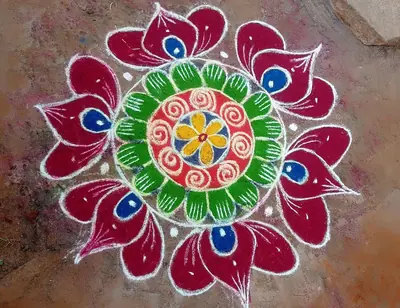
Alpana floor art, painted to welcome the new year
A priest blesses a new account book for halkhata on the first day of the year
Students in matching festive panjabis celebrate the new yearDhaka, Bangladesh

Pohela Boishakh today

People wear new clothes, often white and red saris and panjabis, and greet each other with Shubho Noboborsho. Children and adults paint their faces and join fairs with folk music and crafts.

Many families start the day with panta bhat, soaked rice, served with fried hilsa fish and chillies, and end it with sweets like rosogolla and sandesh.
How people celebrate Pohela Boishakh

  • Greeting with "Shubho Noboborsho"
  • Haal Khata: new account books and sweets at shops
  • Alpana at the door
  • New clothes, often red and white
  • Prabhat pheri songs and fairs
  • Feasts with fish, rice and mishti

How to wish well

  • Greet on the morning of the new year; elders are greeted first with a pronam.
  • Shops and businesses send Haal Khata invitations and thanks to their regular customers.
  • In Bangladesh the day is always 14 April; in West Bengal check the local calendar, as it may be the 15th.
  • The festival is shared by Bengalis of every faith, so wishes about the new year, food and songs suit everyone.

Questions about Pohela Boishakh

When is Pohela Boishakh 2027?

In West Bengal, Poila Baisakh 2027 is expected on 15 April. In Bangladesh it is on 14 April, as every year.

Why is Pohela Boishakh on different days in India and Bangladesh?

Bangladesh fixed the date to 14 April with a revised calendar. West Bengal follows the traditional calendar, so the day moves between 14 and 15 April.

What do you say on Pohela Boishakh?

Say "Shubho Noboborsho", which means Happy New Year in Bengali.

What is Haal Khata?

Haal Khata is the opening of a new account book by traders on the first day of the year. Customers are invited for sweets and good wishes.

Which year begins on Pohela Boishakh 2027?

Bengali year 1434 begins in April 2027.

What is Mangal Shobhajatra?

A colourful new year procession in Dhaka with large masks and floats, recognised by UNESCO as intangible cultural heritage.

Keep exploring

Related

Coming up next

    All festival wishes

    Donate