- 12 Rabi al-Awwal for many Sunnis
- 17 Rabi al-Awwal for many Shia Muslims
- Also called Eid Milad-un-Nabi
Where it began
Mawlid means birth. The Prophet is remembered as born in Mecca in the Year of the Elephant, around 570 CE, and many Muslims keep the 12th of Rabi al-Awwal as the day.
Public celebrations are recorded from around the 12th century, and the day grew into a time of poetry and gatherings in many lands. Some Muslims choose not to celebrate it, and different views are respected within the faith.
How it grew over time
About 570 CE
The Prophet is born in Mecca.
12th and 13th centuries
Public Mawlid gatherings with poems and feasts are recorded in Egypt and Iraq.
Later centuries
Poems of praise such as the Burda are recited at Mawlid gatherings in many regions.
Today
The day is a public holiday in many countries, including India.
How it is celebrated in different places
India and Pakistan
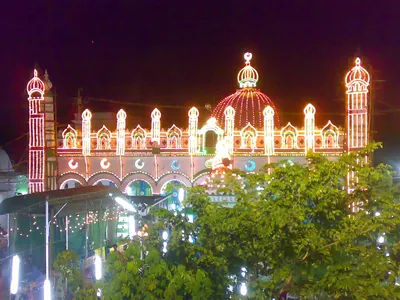
Mosques and streets are lit, and gatherings recite naat poems in praise of the Prophet.
Egypt
Sweet shops sell special Mawlid sweets and sugar dolls.
Indonesia and Malaysia
Communities hold processions and readings, often with decorated egg displays in Java.
Morocco and North Africa
Sufi groups sing and families share meals.
Mawlid moments
Mawlid today
Those who keep the day gather to hear about the Prophet's life and character, recite poems and prayers, feed the poor and share sweets with neighbours.