- Maasi-Panguni change (March)
- Story of Savitri
- Kozhukattai adai and butter
- Tamil homes
Where it began
Karadai is the steamed cake offered on the day and nombu means a vow or fast. The vow is kept at the exact time one Tamil month ends and the next begins.
Legend says Savitri chose to marry Satyavan even though he was fated to die within a year. When Yama came for him, she followed and spoke with such wisdom that Yama returned his life.
One story tells that Savitri made an offering of rice cake and butter from what she had in the forest, which is why the same simple offering is made today.
How it grew over time
Ancient times
The story of Savitri and Satyavan is told in the Mahabharata.
Tamil tradition
Tamil women kept the vow as Karadaiyan Nombu, tied to the change of month.
Family custom
Mothers taught daughters the prayer, the thread and the recipe for the adai.
Today
Women keep the vow at home in Tamil Nadu and around the world, at the timing set in the almanac.
How it is celebrated in different places
Tamil Nadu
Women fast until the set time, then tie the yellow thread and offer the adai.
Chennai and cities
Families check the almanac for the exact time, which may come at night.
Sri Lanka
Tamil women keep the vow with the same prayer and offering.
Tamil families abroad
Women in Singapore, Malaysia, the US and UK keep the vow at home.
Karadaiyan Nombu moments
Karadaiyan Nombu today
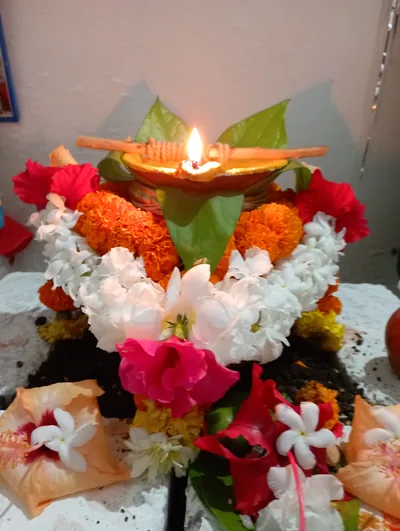
Women make sweet and salty adai with rice flour and cowpeas, offer it with butter, and tie a yellow thread around their neck while saying a short prayer. Husbands and families share the cakes after the worship.