TodayTools

About Dussehra

00 days

About Dussehra

Dussehra, also called Vijayadashami, is the tenth day after the nine nights of Navratri, on the tenth day of the bright half of Ashvin, in September or October. It celebrates the victory of good over evil.

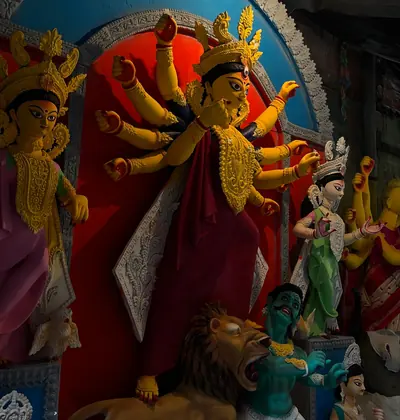
In the north it marks Lord Rama's victory over Ravana. Ram Leela plays retell the Ramayana over the nine nights, and on Dussehra evening huge effigies of Ravana, Meghnad and Kumbhakarna are burnt with fireworks. In the east and south it marks Goddess Durga's victory over Mahishasura.

Families worship the shami tree and exchange its leaves, or apta leaves in Maharashtra, as gold. Many children begin learning on this day, tools and books are honoured, and new ventures are started. Karnataka celebrates the royal Mysuru Dasara, Himachal the week-long Kullu Dussehra, and Telangana and Andhra Pradesh exchange jammi leaves.

Dussehra is celebrated across India and in Nepal, where the same season is Dashain, and by Indian communities around the world.

  • Tenth day of Ashvin Shukla
  • End of Navratri
  • Ramlila and Ravana effigies
  • Mysuru Dasara in Karnataka

Where it began

Dussehra comes from Sanskrit words meaning the removal of ten, often linked to the ten heads of Ravana. Legend says Rama defeated Ravana on this day and rescued Sita, so the day is called Vijayadashami, the tenth day of victory.

Another story tells that the goddess Durga defeated the demon Mahishasura on the tenth day, which is why Dussehra ends Navratri and Durga Puja. In the Mahabharata, the Pandavas are said to have taken back their weapons from a shami tree on this day, so the tree and tools are worshipped.

Ramlila, the stage play of Rama's life, has been performed in North India for centuries. The Ramlila of Ramnagar near Varanasi, which goes on for a month, is one of the oldest, and UNESCO lists the Ramlila tradition as Intangible Cultural Heritage.

Ravana burns at sunset as Dussehra endsJakhu Temple, Shimla

How it grew over time

  1. Ancient times

    The epics give the stories of Rama's win and the Pandavas' weapons, and kings set out on campaigns after the autumn rains on this day.

  2. Vijayanagara era

    Visitors describe the Mahanavami festival at Hampi, with parades, elephants and music, the forerunner of Mysuru Dasara.

  3. 1600s

    The Wodeyar kings of Mysore begin their royal Dasara, a tradition the city still keeps.

  4. 1800s

    Ramlila plays grow in towns across North India, with whole neighbourhoods taking part as actors and audience.

  5. 2008

    UNESCO lists Ramlila, the traditional performance of the Ramayana, as Intangible Cultural Heritage.

  6. Today

    Effigies of Ravana, Meghnad and Kumbhakarna, some very tall, go up in grounds across India and burn at sunset.

How it is celebrated in different places

  • Delhi and Uttar Pradesh

    Ramlila plays run for nine nights, and on the tenth Rama's arrow lights the Ravana effigy as fireworks burst.

  • Mysuru, Karnataka

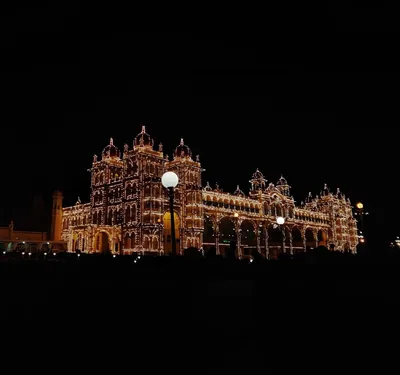
    The palace glows with lakhs of bulbs, and a grand procession of decorated elephants carries the goddess Chamundeshwari through the city.

  • Kullu, Himachal Pradesh

    Kullu Dussehra begins on Vijayadashami and lasts a week, as village deities are carried to the valley to greet Raghunath.

  • Tamil Nadu and Kerala

    Vijayadashami is the day of Vidyarambham, when small children write their first letters in rice and begin learning.

  • Nepal

    Dashain, the biggest festival of the year, ends with elders giving tika and jamara blessings to the young.

Dussehra moments

Ramlila actors in costume before the playIndia
Dashain in a royal square, painted in 1856Kathmandu, Nepal
A Dasara doll display, kept in homes during the festivalMysuru, Karnataka

Dussehra today

People worship books, tools, vehicles and instruments, start new work, buy new things and visit elders. In the evening families go to the nearest ground to watch the Ravana effigy burn, a simple, joyful reminder that good wins in the end.
How people celebrate Dussehra

  • Ram Leela plays over the nine nights
  • Burning Ravana effigies with fireworks
  • Shami or apta leaves exchanged as gold
  • Seemollanghan, crossing the village border
  • Vidyarambham, starting lessons for children
  • Honouring tools, books and vehicles
  • Jalebi and sweets with family

How to wish well

  • Send wishes on the morning of Dussehra, and touch base with elders for their blessings.
  • In Maharashtra people say "Sona ghya, sona sarkhe raha" (take gold, stay like gold) while giving apta leaves.
  • For Telugu and Kannada friends, "Vijayadashami" is the usual name; Bengali friends greet with "Shubho Bijoya".
  • Wishes about new beginnings suit colleagues and customers, since many start new work today.
  • Jokes about Ravan's ten heads are fine; keep jokes away from Lord Rama and the Goddess.

Questions about Dussehra

When is Dussehra 2026?

Dussehra, or Vijayadashami, is on 20 October 2026, the day after the nine nights of Navratri.

When is Dussehra 2027?

Dussehra in 2027 is expected on 9 October.

Why is Dussehra celebrated?

It celebrates the victory of good over evil: Lord Rama's win over Ravana, and Goddess Durga's win over Mahishasura.

Are Dussehra and Vijayadashami the same?

Yes. Dussehra is the common name in the north; Vijayadashami, the tenth day of victory, is used across India.

What do you say on Dussehra?

Say "Happy Dussehra" or "Happy Vijayadashami". In Hindi, "Dussehra ki hardik shubhkamnayein"; in Telugu, "Vijayadashami Shubhakankshalu"; in Marathi, "Dasaryachya hardik shubhechha".

Why are shami leaves given on Dussehra?

The Pandavas are said to have hidden their weapons in a shami tree. Its leaves are exchanged as a sign of gold, victory and good luck.

What is Ravan Dahan?

Ravan Dahan is the burning of Ravana's effigy on Dussehra evening, at the end of the Ram Leela, as a sign that evil is defeated.

Keep exploring

Related

Coming up next

    All festival wishes

    Donate