- 22 March every year
- Province formed in 1912
- Capital Patna
- Kept as a state day since 2010
Where it began
Bihar has one of the oldest histories in India. The kingdom of Magadha rose here, and its capital Pataliputra, today's Patna, was the seat of the Maurya and Gupta empires. The emperor Ashoka ruled from this land.
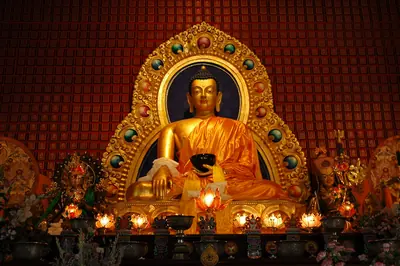
The Buddha found enlightenment at Bodh Gaya, Mahavira, the great teacher of the Jains, was born near Vaishali, and the university at Nalanda drew students from across Asia. The name Bihar itself is thought to come from vihara, a Buddhist monastery.
Under British rule Bihar was part of the Bengal Presidency. On 22 March 1912 Bihar and Orissa were separated from Bengal as a new province, and in 1936 Orissa became a province of its own.
How it grew over time
Ancient times
Magadha grows into a great kingdom, and Pataliputra becomes the capital of the Maurya empire.
5th century onward
Nalanda becomes a famous centre of learning for students from many lands.
1912
Bihar and Orissa are made a province apart from Bengal on 22 March.
1936
Orissa becomes its own province, and Bihar takes its present name as a province.
2010
The state government begins celebrating 22 March as Bihar Diwas.
Today
Bihar Diwas is a state holiday with events in Patna and every district.
How it is celebrated in different places
Patna
Gandhi Maidan hosts exhibitions, music, food stalls and evening shows with well known artists.
Mithila region
Madhubani painters show their bright folk art, and Maithili songs fill the stages.
Districts and schools
Schools hold quizzes, rallies and cultural events about the history of Bihar.
Bihari communities abroad
People of Bihari roots in Mauritius, the Gulf, the US and UK hold get togethers with Bhojpuri songs and food.
Bihar Diwas moments
Bihar Diwas today
Programmes bring together folk music in Bhojpuri, Maithili and Magahi, dances, plays and craft fairs. Buildings in Patna are lit up for the evening.
At home families make litti chokha and thekua, and people share pride in the state's long story of learning, faith and culture.